
Deja Voodoo
You have been here before. You just don’t remember how.
That is Deja Voodoo.
Not quite memory. Not quite dream. Something older and stranger than both — the sensation of standing in a place you have never been and knowing exactly what is around the corner. The image that surfaces in a half-awake moment and dissolves before you can name it. The face in the peripheral vision of the unconscious mind that turns out to be something you made up — or something that was always there and has been waiting for you to look directly at it.
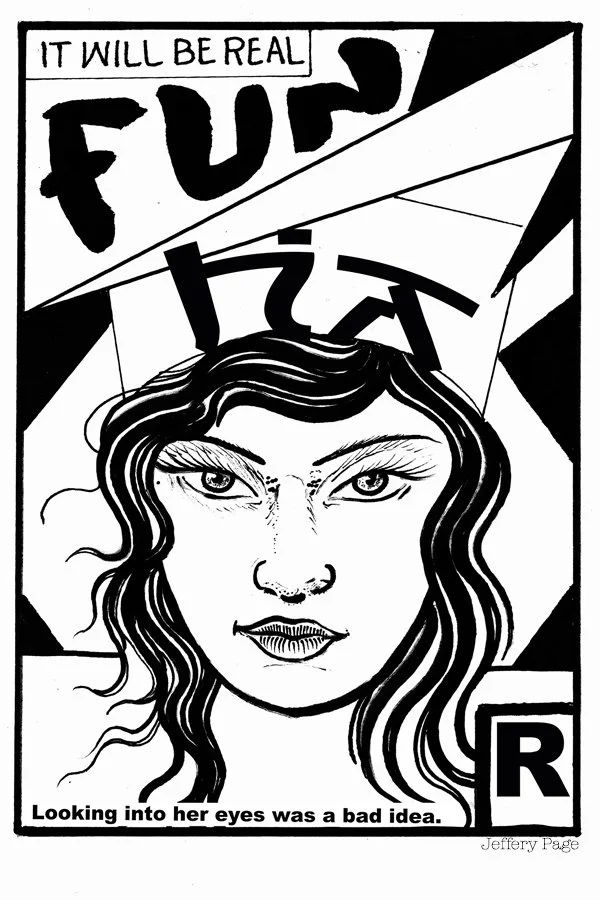
Jeffery Page drew this collection from that place. Every image in Deja Voodoo arrives from the subconscious first and the sketchbook second. The hand moves. The mind follows. The result is a body of work that operates the way the best surrealist art has always operated — not as decoration, not as illustration, but as a direct transmission from the interior world of a working artist who has spent decades paying attention to what lives in the margins of his own consciousness.
What lives there, it turns out, is the American Monster.


contact: Victoria@JefferyPage.com for inquiry
The American Monsters Series
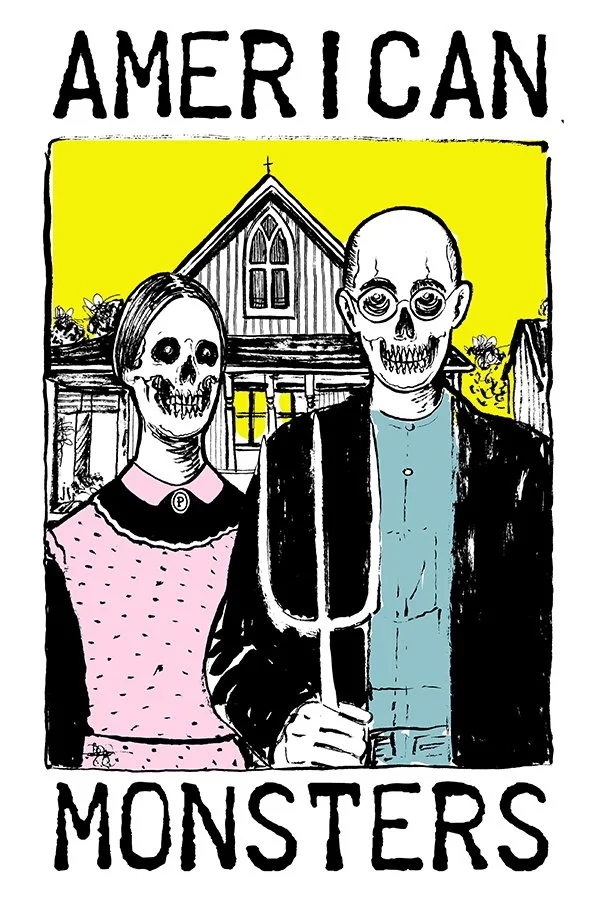
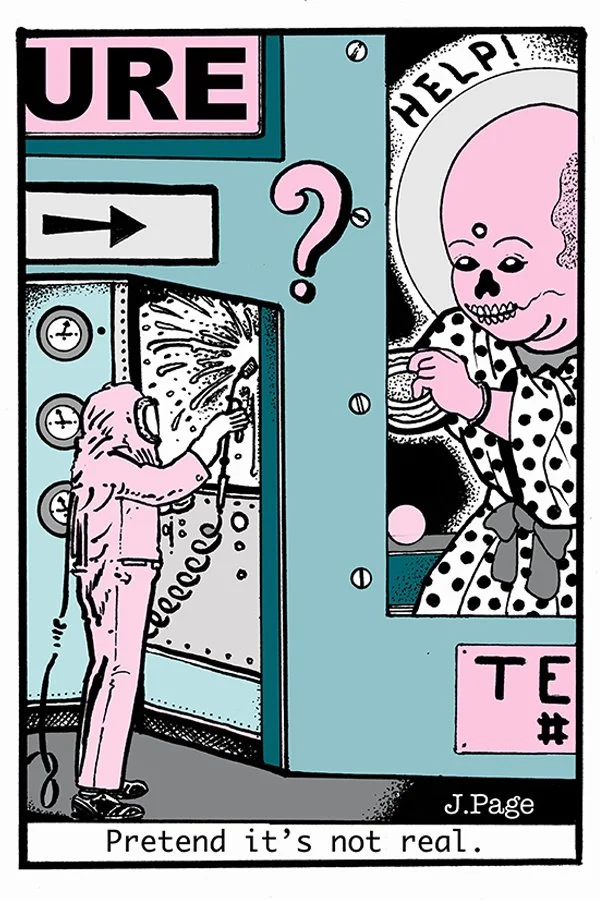
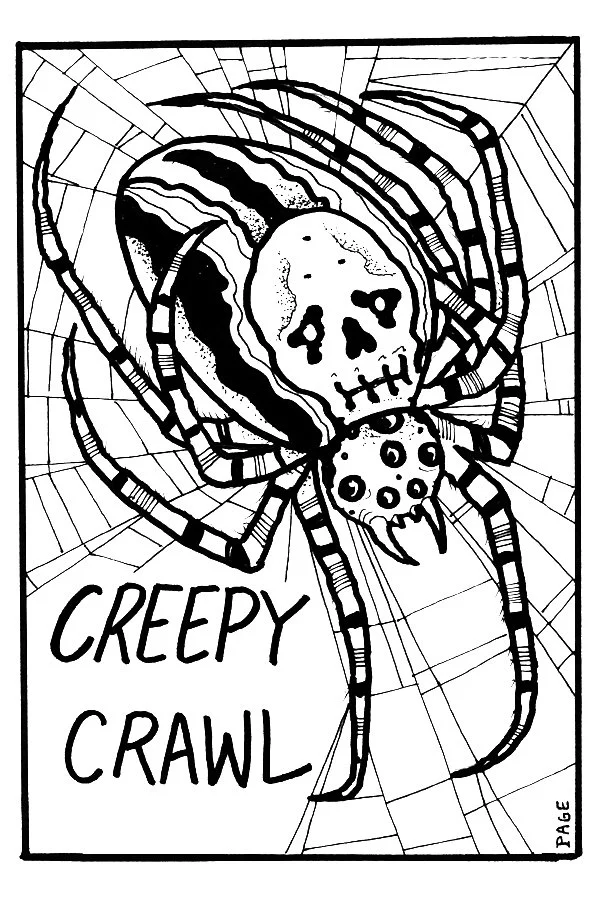
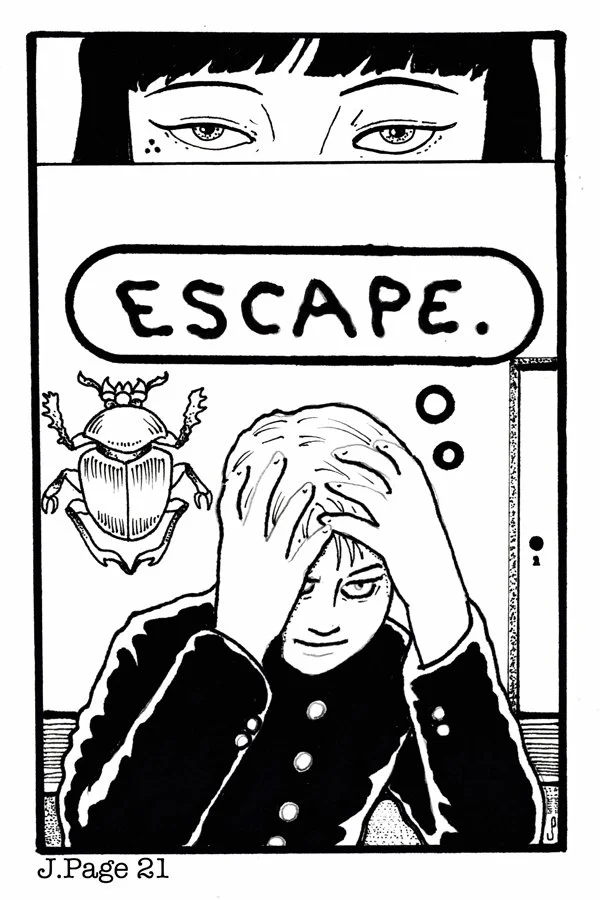
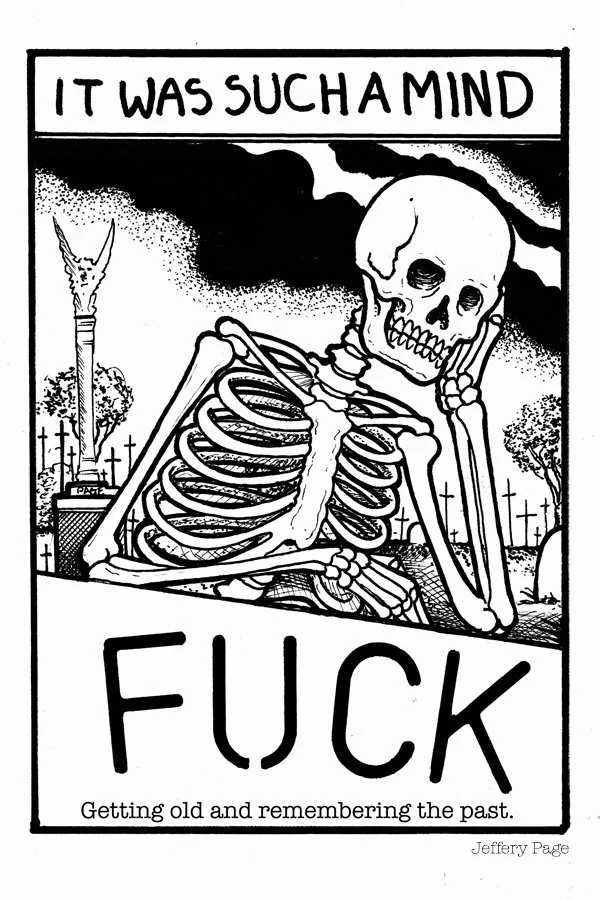
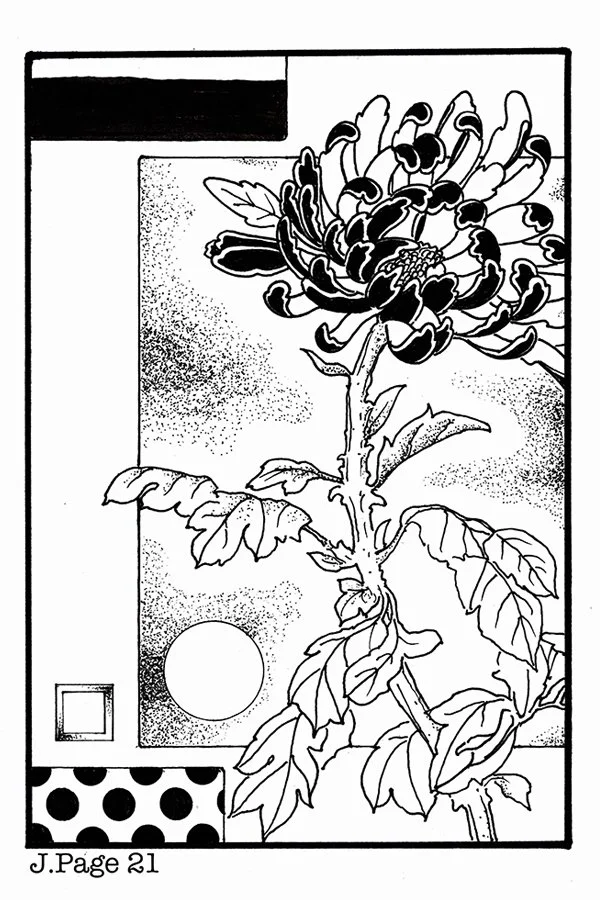
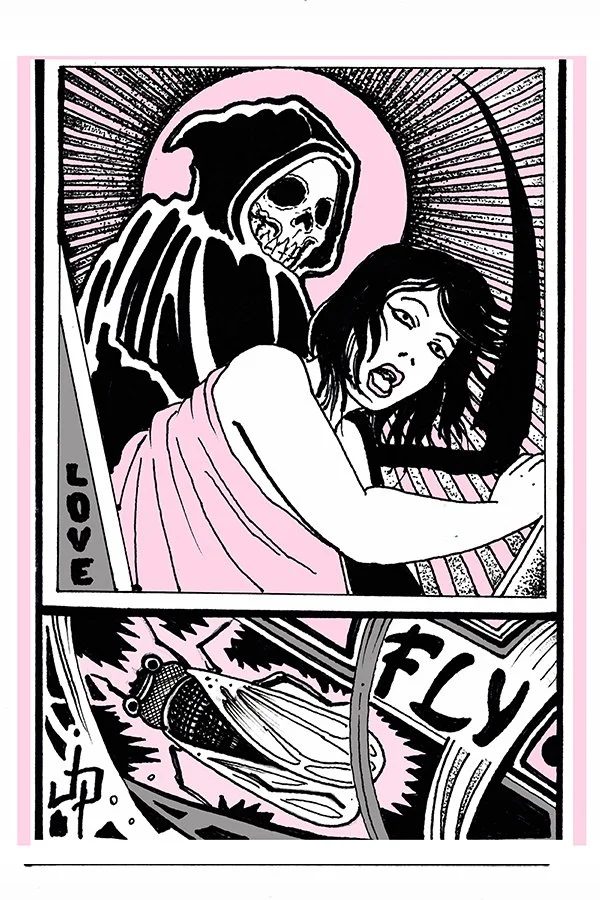
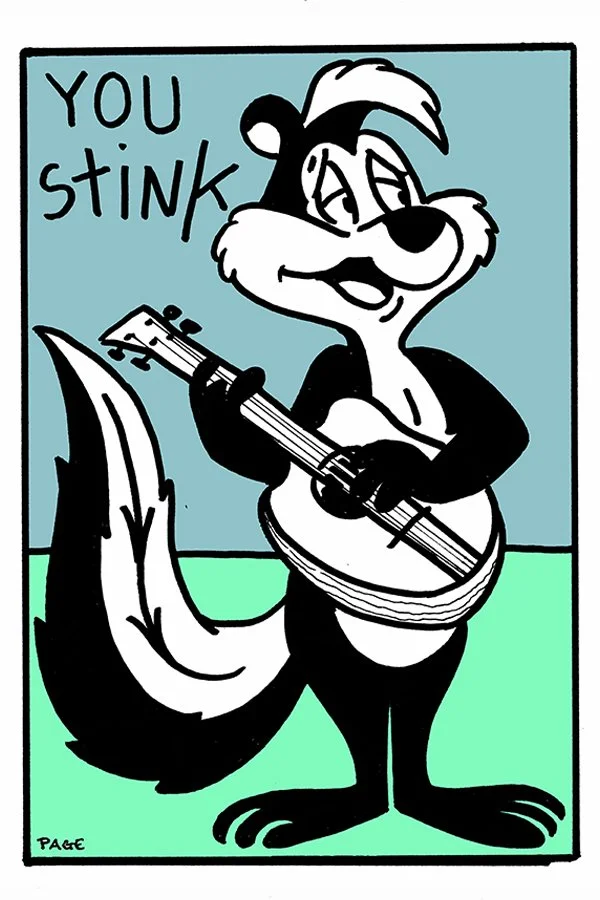
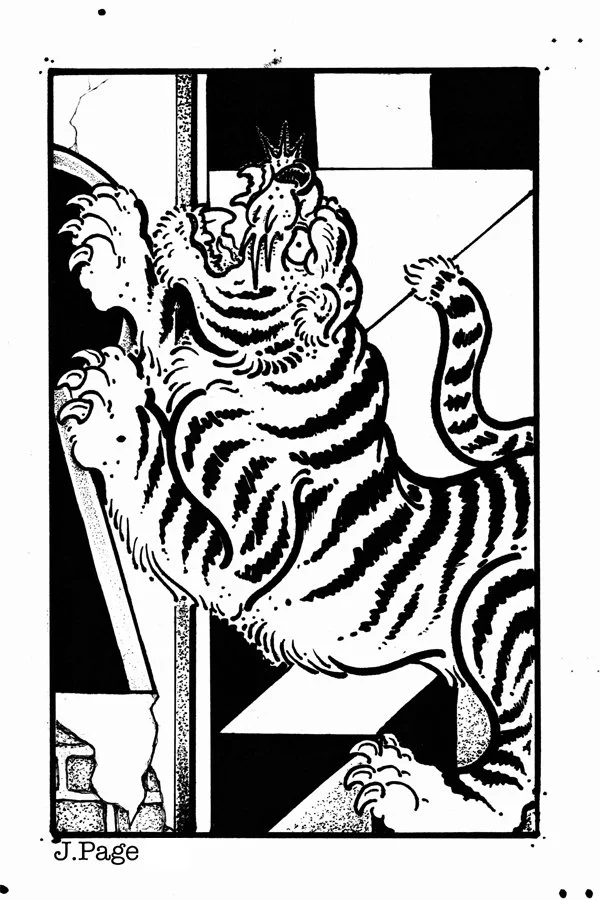
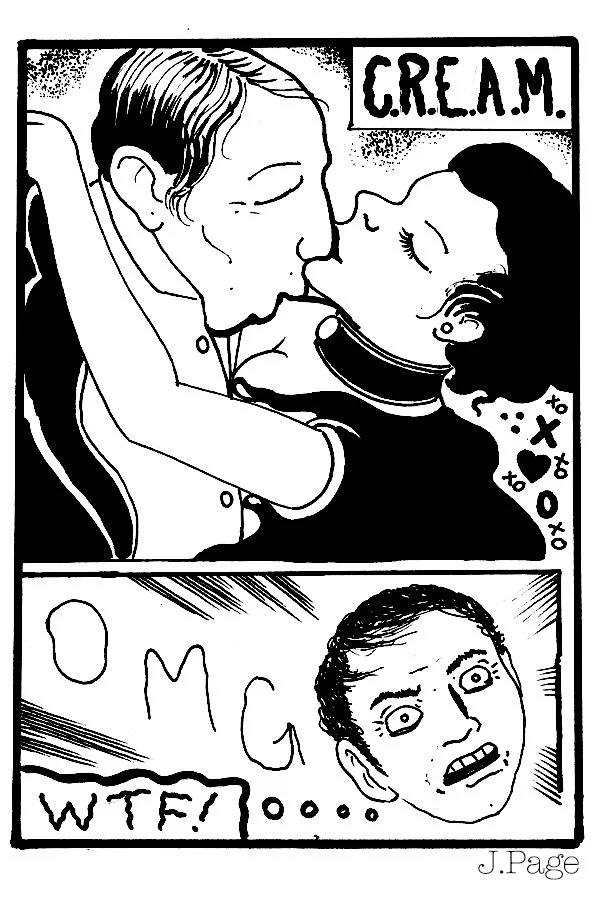
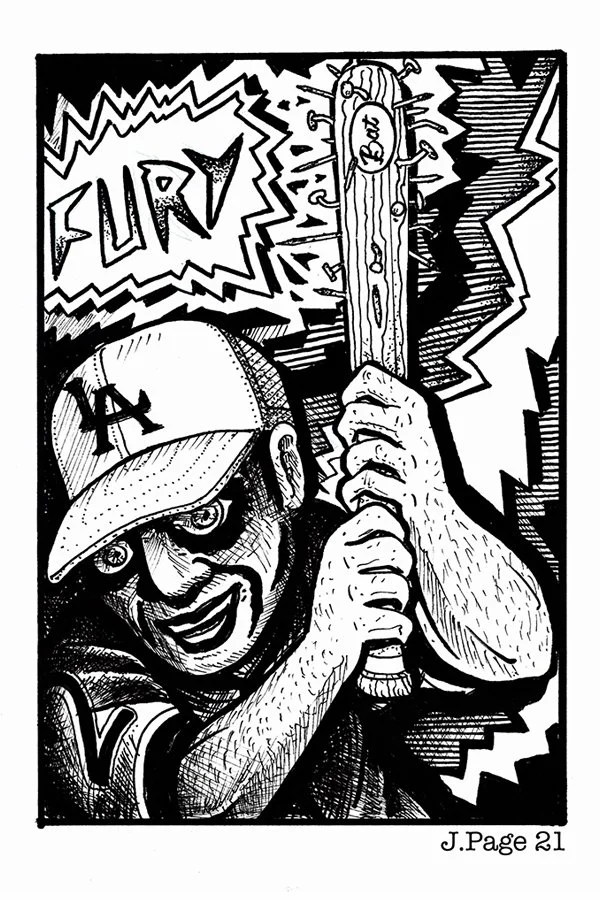
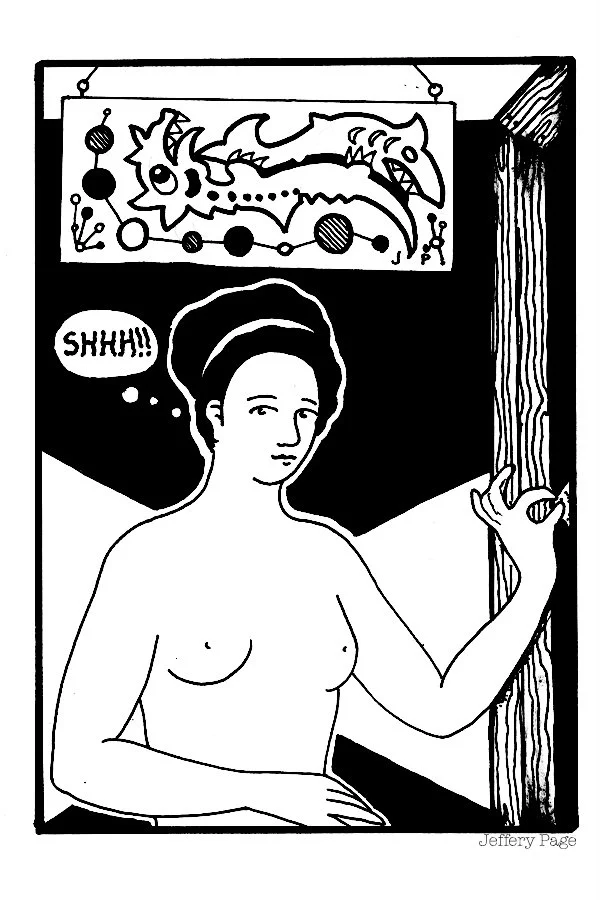
The eighteen works in this gallery are part of the American Monsters series — Jeffery Page’s most psychologically complex body of work to date. Executed in 2021 and 2022, this series draws from the deep well of American monster mythology: the creatures of folklore and horror, the figures of pop culture darkness, the archetypes of nightmare and fairy tale that have populated the American imagination since the first campfire story was told in a clearing that people were warned not to enter.
But American Monsters is not a horror collection. It is a portrait collection.
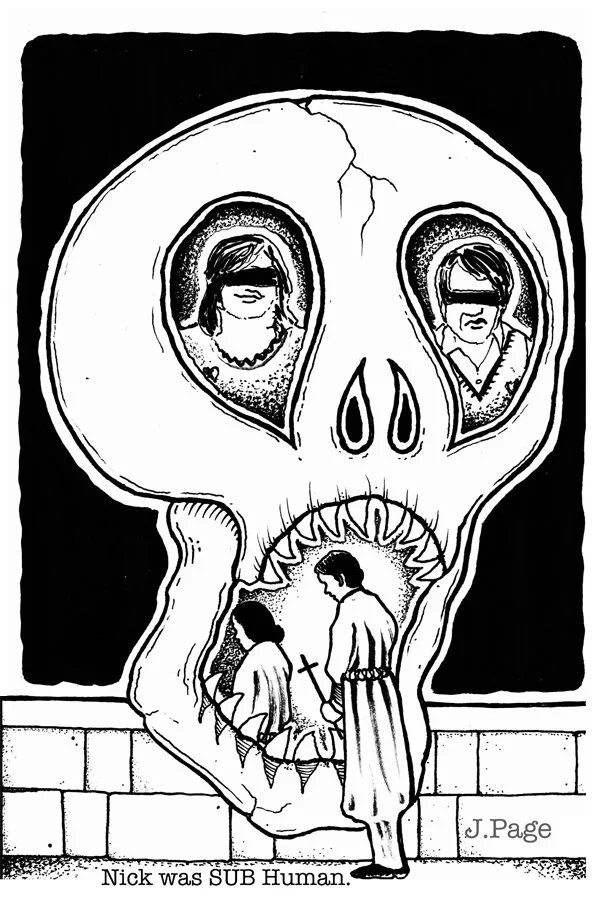
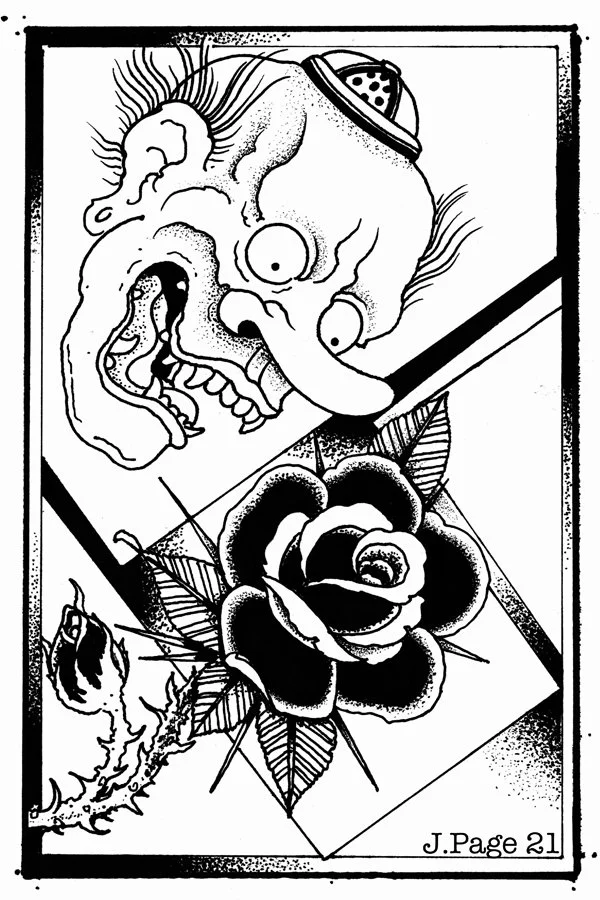
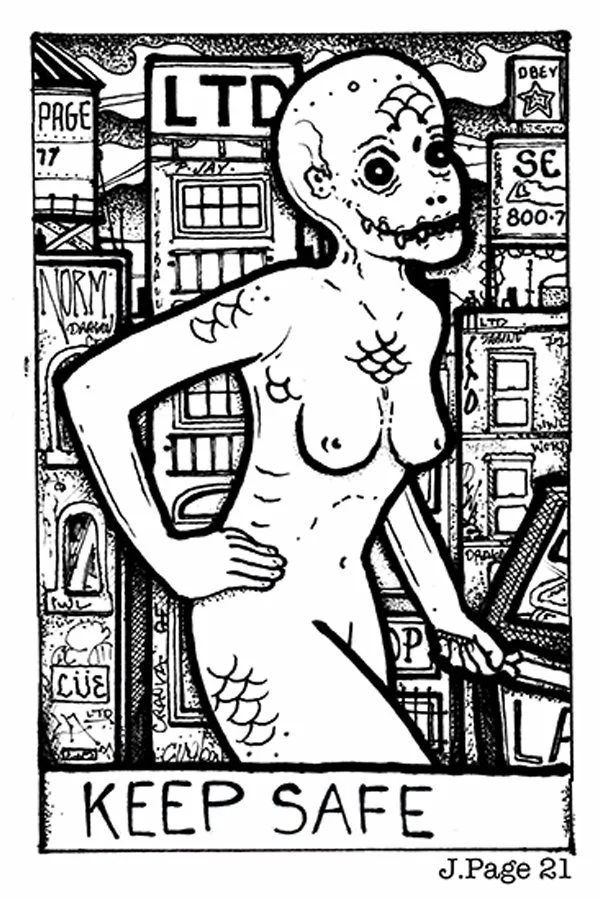
The monsters that populate this series are not external threats. They are interior landscapes. They are the Rorschach test that Jeffery Page explicitly invokes in his artist statement — the image that tells you more about what you bring to it than what the artist put in. A viewer who sees danger in these drawings is telling you something about themselves. A viewer who sees beauty is telling you something else. A viewer who sees both — who cannot separate the two — is exactly who this work was made for.
The text fragments that accompany the images in this series are not titles or captions. They are recollections — incomplete, non-linear, pulled from the same subconscious space as the images themselves. Image and text are not label and artwork. They are two halves of the same fragmented memory, placed together on the page in the hope that the viewer’s own interior world will supply the missing third piece.
This is the Deja Voodoo. The feeling that the story is already familiar. The certainty that you have seen this monster before.
The Tradition This Work Belongs To
Deja Voodoo and the American Monsters series place Jeffery Page in a lineage of artists who have worked at the intersection of the subconscious, the mythological, and the visually confrontational — a tradition that has consistently produced some of the most critically significant and commercially valuable work in contemporary fine art.
Francisco Goya’s Black Paintings — executed directly onto the walls of his home in the early 19th century, discovered after his death, and now among the most discussed works in the history of Western art — were the first fully realized monsters of the modern imagination. They were not illustrations of external evil. They were confessions of interior darkness. Deja Voodoo operates in that same honest territory: the artist drawing what the mind produces when nobody is supposed to be looking.
The Surrealist movement — from Salvador Dalí and Max Ernst through to Leonora Carrington and Remedios Varo — built an entire international art movement on the principle that the subconscious mind, allowed to speak freely through the artist’s hand, produces imagery of more power and truth than any amount of conscious composition. The Rorschach parallel that Jeffery Page draws explicitly in his description of this series places Deja Voodoo in direct dialogue with the psychological tradition that surrealism always operated alongside — the idea that the image is a mirror, and what it reflects belongs to the viewer as much as the artist.
Mark Ryden — the California artist widely credited as the defining figure of pop surrealism, the movement Jeffery Page’s broader practice belongs to — built a multi-million-dollar market for work that fuses childhood iconography, horror, beauty, and the American mythological landscape into images that are simultaneously sweet and deeply unsettling. The American Monsters series works in that same tonal space: familiar enough to be approachable, strange enough to stay with you.
Henry Darger — the outsider art figure whose entire life’s work was discovered posthumously, in a body of work depicting a war between child slaves and their monstrous captors executed in watercolor and collage — demonstrated that the most powerful American monster mythology often comes from the most interior and private artistic practice. Deja Voodoo is not private — it is a gallery collection available for acquisition — but it carries the same quality of unguarded interior honesty that made Darger’s work one of the most discussed finds in 20th century art history.
In the high fashion world, the subconscious and the monstrous have been among the most productive creative territories of the last 30 years. Alexander McQueen built his entire design philosophy on the beauty of darkness, the elegance of horror, and the fashion world’s capacity to hold the monster and the sublime in the same garment simultaneously. His Voss collection — staged as an asylum observation chamber — demonstrated that fashion could operate as a direct transmission from the designer’s subconscious with exactly the same power as any gallery artwork. Rick Owens has spent three decades building a world-class fashion empire on an aesthetic that is explicitly monstrous, primitive, and interior — dark, heavy, architectural, operating at the border of the human and the something-else. Rei Kawakubo of Comme des Garçons has consistently produced collections explicitly described as coming from her subconscious without editorial revision — and the results have defined the most intellectually serious end of international fashion for 40 years.
The Deja Voodoo collection — subconscious, monstrous, American, drawn with the hand of a working artist who has spent decades developing his visual vocabulary across fine art, tattooing, pop surrealism, and underground culture — speaks to every one of those traditions fluently. It is available for acquisition right now, at the price of an original work by a working Los Angeles artist whose catalog is building toward the kind of institutional recognition that changes prices permanently.
Why This Collection Now
Deja Voodoo was executed in 2021 and 2022 — a period when every working artist in the world was confronting the interior landscape whether they chose to or not. The isolation, the anxiety, the return to fundamental questions about what it means to be human in a world that was suddenly unrecognizable — all of that is present in this work without being stated. It doesn’t need to be stated. The monsters say it.
The American Monsters series is a document of that period, made by an artist with the technical vocabulary, the cultural literacy, and the emotional honesty to translate it into something that will outlast the moment that produced it.
Eighteen works. All originals available. One of each exists. When they are gone, the series is complete and closed.
Acquire Original Works
Every work in the Deja Voodoo / American Monsters series is an original drawing available for private acquisition. As your gallery director, I am recommending this collection to collectors who are looking for work that sits at the intersection of psychological depth, pop surrealism, and American cultural mythology — a combination that the current fine art market is actively rewarding at every price level from emerging to established.
These are unique, hand-executed works. Certificates of authenticity are available upon request.
📩 Victoria@JefferyPage.com
Please include your name, the work(s) of interest, and the nature of your inquiry. Collector pricing and provenance documentation available on request.
Deja Voodoo | American Monsters Series © Jeffery Page 2021–2026. All rights reserved. Part of the JefferyPage.com gallery collection — home of Toothbrush Theory, Consume, As the Page Turns, Primarily Primitive, Saint Louis, and the full creative universe of Jeffery Page & Friends. Published under Sunset Sirens Records & Publishing, Los Angeles, California.